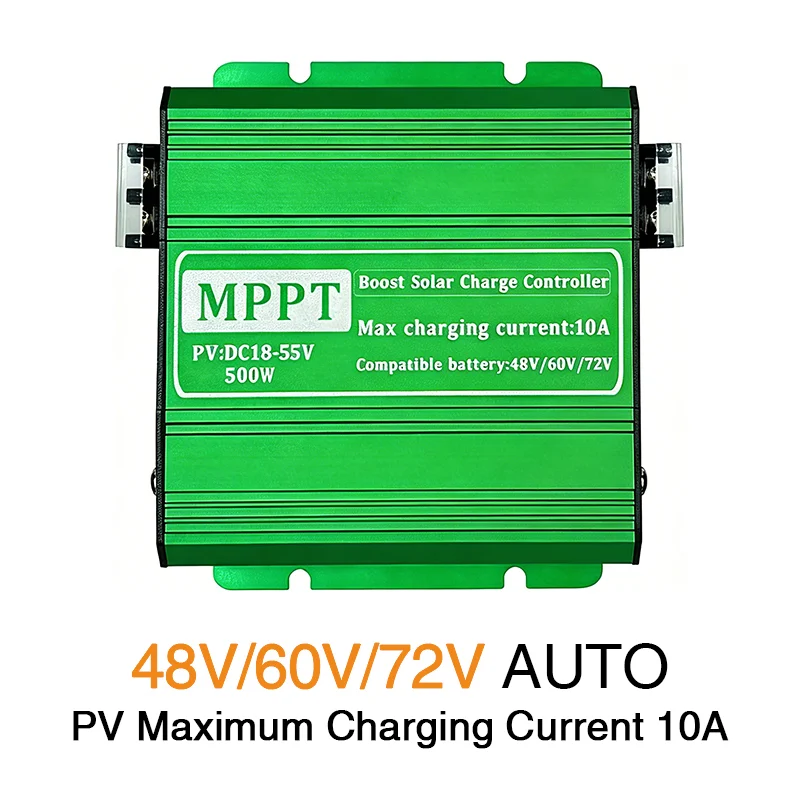
For many off-grid solar projects, the battery system voltage is higher than the voltage supplied by a small solar panel string. In these cases, a normal step-down controller may not be the right fit. The SE7210V boost MPPT solar charge controller is designed for buyers who need to charge 48V, 60V or 72V lead-acid battery systems from a lower-voltage PV input range.
Where a boost MPPT controller is useful
A boost MPPT controller is useful when the solar panel voltage is not high enough to charge the battery bank directly. This can happen in compact solar systems, electric mobility support systems, small DC backup equipment, lighting projects and remote power applications where panel space is limited. Instead of increasing the panel string voltage, project designers can use a boost charging approach when the system conditions are suitable.
The SE7210V is a 10A boost MPPT controller for 48V, 60V and 72V battery systems. For distributors, this makes it a focused product rather than a general low-voltage controller. It is best presented to buyers who already understand their battery voltage and need a controller for a specific high-voltage charging requirement.
Key selection checks before ordering
Before placing a wholesale or project order, buyers should confirm the PV input voltage range, battery voltage, charging current and expected daily energy demand. The controller rating should be matched with the solar panel configuration and the battery bank. A controller that fits the voltage requirement but is undersized for the project may not provide the charging performance the end user expects.
- Confirm whether the battery system is 48V, 60V or 72V.
- Check the solar panel open-circuit voltage and operating voltage.
- Review the required charging current and daily charging time.
- Confirm the battery chemistry and charging settings with the supplier.
- Leave space for ventilation and clean wiring inside the control box.
Why controller matching matters in solar design
In solar power system design, controller matching affects charging stability, battery protection and user satisfaction. A battery bank with the right nominal voltage can still perform poorly if the PV input is not planned correctly. For this reason, buyers should not select a boost MPPT controller only by the model name. The complete system design should include the panel wattage, cable length, battery capacity and load pattern.
For distributors, this is also a sales support point. A clear selection guide helps local installers explain why a boost controller is different from a common PWM or standard MPPT controller. It also reduces after-sales questions caused by mismatched panel voltage or unclear battery specifications.
Wholesale purchasing notes for SE7210V
When preparing an SE7210V order, buyers can share the battery voltage, panel specifications, expected use environment and target market with the supplier. This helps confirm whether the controller is suitable for the project and whether the product documentation should emphasize 48V, 60V or 72V applications.
The SE7210V boost MPPT controller is a good option for product lines that already include standard solar charge controllers but need a more specific solution for high-voltage battery systems. For importers and project buyers, the most important step is to match the controller to the real PV and battery configuration before bulk purchase.