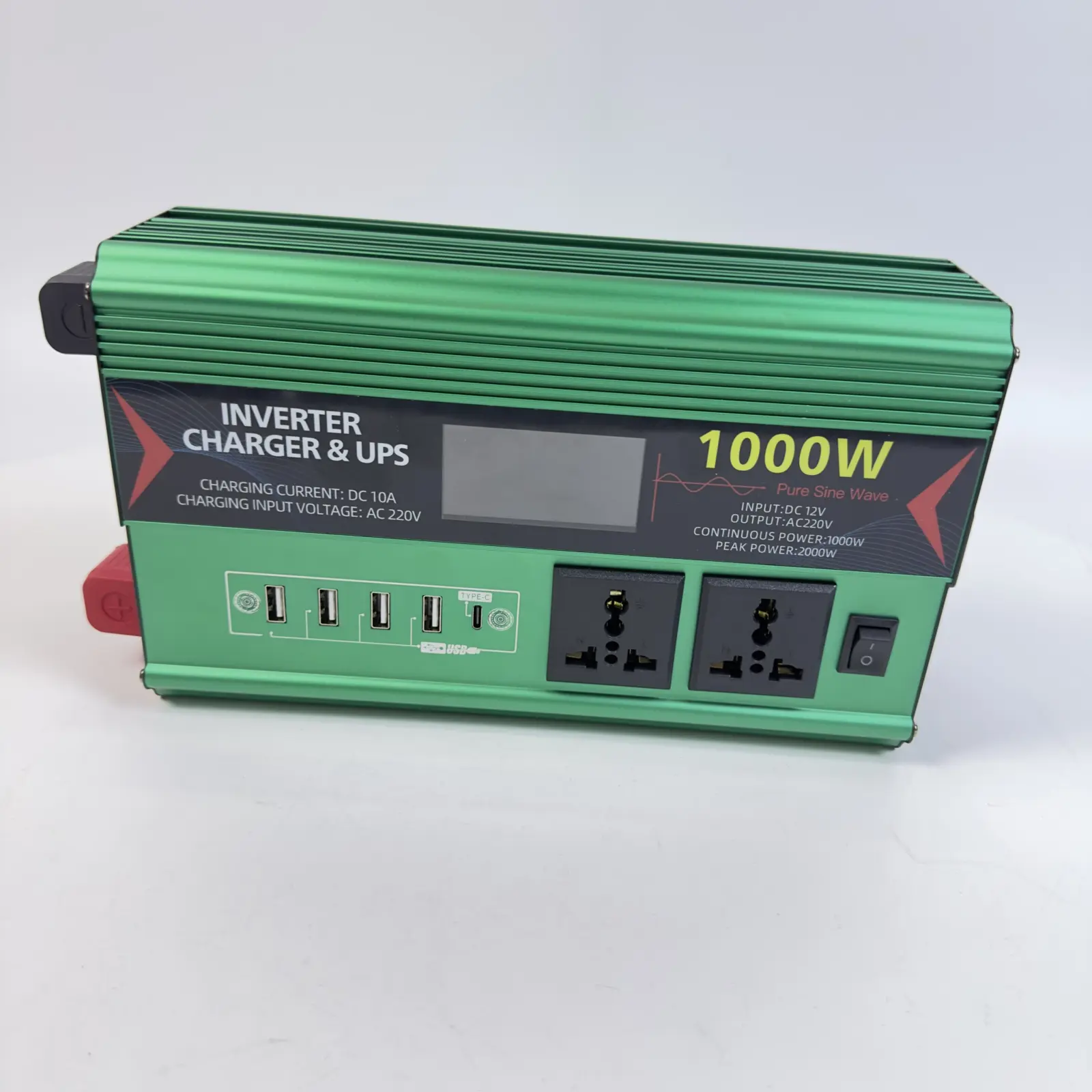
For distributors and project buyers, a 1000W pure sine wave inverter is often selected when the solar backup system has moved beyond simple lighting or phone charging, but still needs to stay compact, predictable, and easy to install. The NPS12-1000 type inverter is suitable for small off-grid power boxes, mobile service vehicles, cabin backup kits, and DC battery systems where clean AC output matters.
Why Pure Sine Wave Output Matters
Compared with a modified sine wave inverter, a pure sine wave inverter is usually the safer choice for sensitive loads such as small refrigerators, test instruments, communication equipment, variable-speed tools, and certain electronic chargers. These loads may start, run, or cool better when the AC waveform is close to utility power.
For overseas solar product channels, this difference is useful when building a product range. Entry-level kits may still use economical inverter models, while higher-value solar backup kits can use a pure sine wave inverter as a clearer selling point.
Matching the Inverter with Battery Capacity
A 1000W inverter should not be selected by wattage alone. Buyers also need to check the battery voltage, battery capacity, cable length, fuse rating, and expected working time. If the battery bank is too small, the inverter may be able to start the load, but the usable backup time will be short and voltage drop can become more obvious.
- For short backup use, confirm peak load and start-up surge first.
- For daily off-grid use, size the battery bank from real energy consumption.
- For field installation, leave enough margin for cable loss and ambient temperature.
Solar Charging Design Points
In a solar backup system, the inverter is only one part of the design. The charge controller, solar panel array, battery type, and daily load profile should be considered together. When the system uses lead-acid batteries, stable charging stages and correct low-voltage protection help reduce service issues. When lithium batteries are used, the BMS settings and inverter low-voltage cut-off should be checked carefully.
For many small commercial systems, the most balanced solution is not the largest inverter available, but the inverter size that matches the real loads. This makes the kit easier to explain, easier to quote, and easier for installers to maintain.
Typical Buyer Applications
The NPS12-1000 pure sine wave inverter can be positioned for compact solar backup kits, emergency power boxes, outdoor maintenance vehicles, remote office equipment, and small household backup packages. For wholesale buyers, it is a practical middle-range inverter that can sit between low-power DC products and larger household inverter systems.
When preparing a quotation, it is helpful to list the suggested controller current, battery capacity range, cable specification, and common supported loads. This gives customers a clearer picture of the whole solar power solution instead of comparing the inverter as a single isolated product.