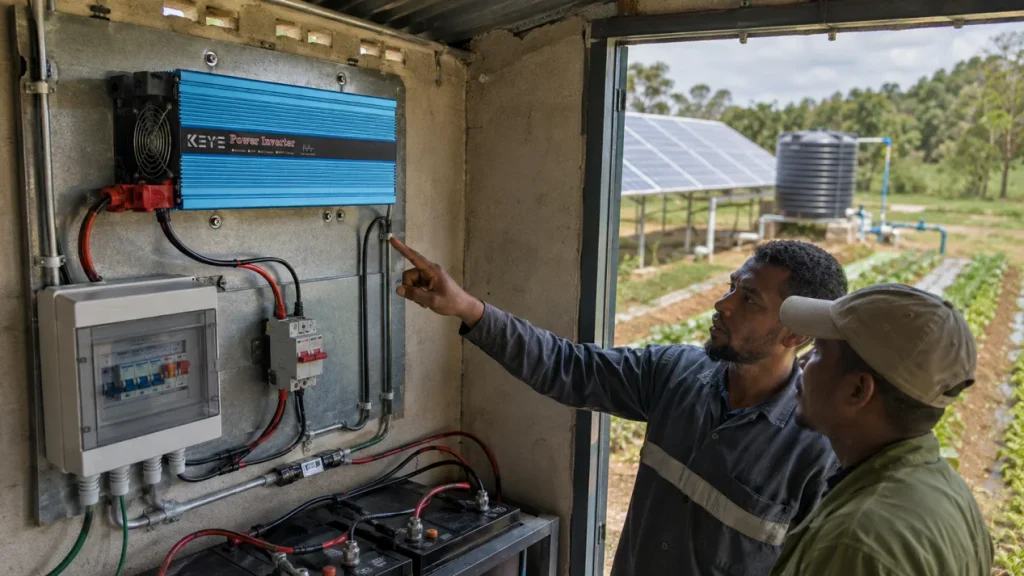
Solar energy can support pumps, controls, lighting and selected tools at farms and other locations beyond dependable utility service. This off-grid installation combines a photovoltaic array, battery storage, protected DC wiring and a wall-mounted power inverter to provide usable AC electricity near the point of demand.
The inverter is installed with short battery cable runs and accessible protective devices. This arrangement allows technicians to inspect terminals, isolation equipment and battery connections while keeping the electronics sheltered from direct weather exposure.
How the system supplies farm loads
Solar panels charge the battery bank through a compatible charging stage. Stored DC energy is converted by the inverter to the required AC voltage and frequency. The system can then supply selected agricultural or facility loads according to the available inverter power and battery capacity.
Key product selection points
- Continuous and starting power required by pumps, motors or tools
- Battery voltage, chemistry and expected operating time
- Solar array wattage and maximum open-circuit voltage
- Pure sine wave output for motor and electronic loads
- Environmental protection, cooling clearance and cable sizing
Commissioning and protection
Before operation, installers should verify cable polarity, terminal torque, protection ratings and inverter output settings. Batteries require appropriate isolation and ventilation. The inverter should not be exposed to moisture, excessive dust or direct heat, and all work must follow local electrical requirements.
Where this configuration fits
Similar systems can serve irrigation controls, livestock facilities, greenhouses, storage buildings and rural workshops. Rather than sizing for every possible load, buyers can first identify priority equipment and daily operating hours to produce a more economical system design.
Contact Gerixi with the load list, motor starting requirements, battery configuration and destination market for inverter selection assistance.